
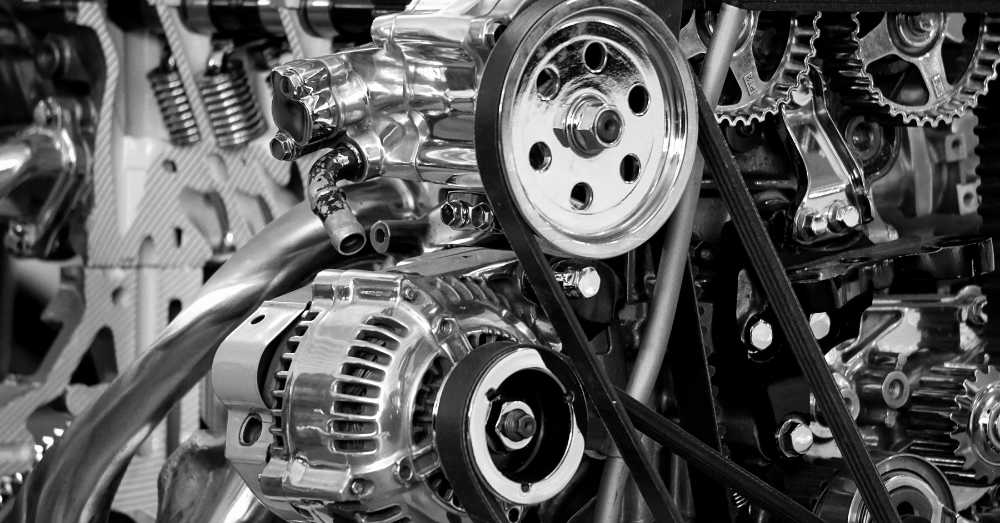
Toyota’s new engine lineup is coming soon, and it will feature better fuel economy and lower emissions without any major downsides. Rivals are taking notice for more than one reason. While others work on EV powertrains, Toyota is poised to take gas engines to the next level, doing more with less.
Toyota Expands the Limits of Gas Engines
The next generation of engines from Toyota will soon be in models at your car dealer. The lineup includes 1.5-liter and 2.0-liter engines, which are also totally different from previous engines. They utilize lighter and more compact designs. The new 1.5-liter weighs 10% less compared to the current 1.5-liter. The new 2.0-liter will have similar gains in power to the current 2.4-liter.
On top of that, Toyota has increased fuel economy and decreased emissions without losing power. However, the next generation of Toyota engines goes beyond better gas mileage and reduced emissions. It also includes vehicle segment diversity. Toyota expects to use these engines in multiple vehicle types, including regular combustion setups and hybrids.
Rivals moving away from gas engines are understandably concerned. Let’s explore in detail how Toyota’s innovation may change the industry.
Vehicle Segment Diversity
Flexibility is the name of the game for Toyota’s new engine family. These engines can be mounted transversely, longitudinally, in the front, or at the back. This versatility means possible future development of sportier Toyota models, plus it makes it easier to add AWD, RWD, or FWD. Toyota can use the 1.5-liter for compact cars and hybrids, while the 2.0-liter turbo will suit SUVs, sports models, and trucks.
Toyota expects to optimize the integration of these engines with other electric components, such as motors, batteries, and drive units. As Toyota owns part of Subaru and Mazda, both of these automakers are likely to do the same. The next generation of Toyota engines will be made compatible with alternative fuel sources as well, including synthetic fuels and biofuels.
No Compromise in Performance
Small engines tend to evoke images of underpowered cars, but technology has evolved. In this case, installing these smaller engines allows for lower hoods, which enhances critical performance aspects like aerodynamics. This, in turn, allows for better fuel economy. The design flexibility of the new engine lineup also gives Toyota the opportunity to revive fan favorites like the MR2 and the Celica.
The American market might even see the engines in Gazoo Racing models like the GR Corolla and GR86. In fact, Toyota engineers have already said that the 2.0-liter engine is capable of going over the 400-450 horsepower of the mid-engine GR Yaris M. A larger turbocharger might put it over 600 horsepower.
In other words, technology has evolved enough where large engines are no longer needed to create the most horsepower. Plenty of power can be created from smaller engines using turbochargers and by focusing on an efficient design. At the same time, cars can be constructed for less weight and more aerodynamics, ensuring that the power is more than enough.
This post may contain affiliate links. Meaning a commission is given should you decide to make a purchase through these links, at no cost to you. All products shown are researched and tested to give an accurate review for you.