


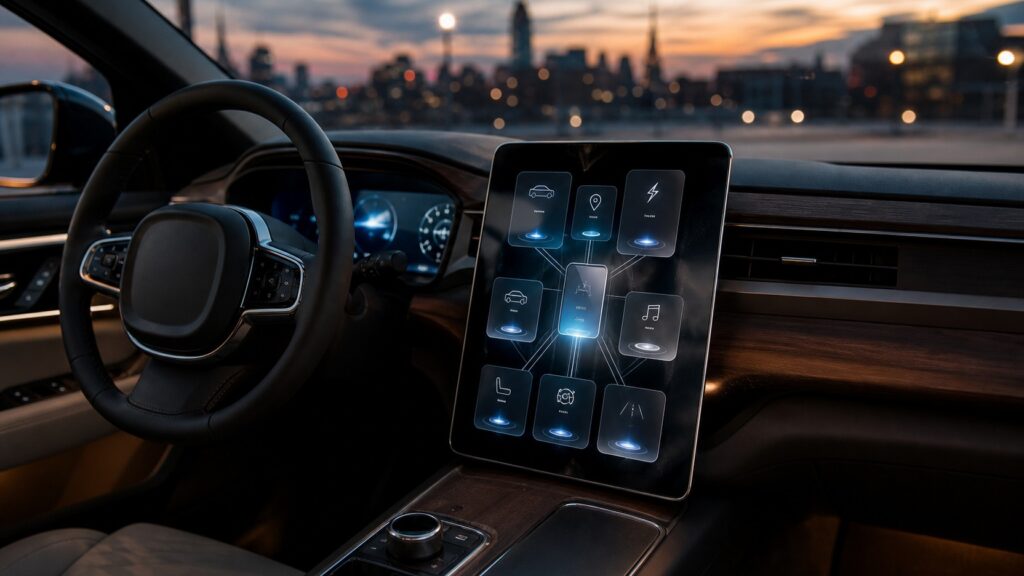
The car you buy today might keep asking for money long after you drive it home. Automakers have found that renting out features and driver-assist tech by the month can be far more profitable than selling steel and rubber, and the early numbers are giving the whole industry a reason to pay attention.
- GM keeps roughly 70 cents of every dollar its software business earns, while a typical car sale returns just four to 10 cents.
- Ford’s commercial FordPro arm now runs more than 900,000 paid subscriptions at about $20 per vehicle each month.
- Many drivers stick around after free trials end, giving carmakers steady, high-margin income.
How We Got Here
Rewind a few years to the height of the connected-car hype. During Covid, companies that sold software as a service were trading at wild valuations, sometimes 15 times their expected annual revenue. Carmakers noticed. If they could make their income look more like recurring software revenue, investors might reward them the same way. So GM, Ford, and Stellantis each floated a bold idea: unbundle the features already built into a vehicle and charge owners a monthly fee to switch them on. Each suggested this could bring in upwards of $30 billion a year by the end of the decade.
Those software valuations have since cooled to about a fifth of their peak, and the $30 billion dream looks optimistic. But the strategy didn’t die. It just got quieter and more realistic, and now the results are starting to show up on balance sheets.
The Numbers That Have Everyone Watching
General Motors is the clearest example right now. Its OnStar service, which handles GPS and cellular safety features, pulled in around $800 million in a single recent quarter, up more than 20% from a year earlier. The company expects to add roughly a million OnStar subscribers this year, pushing the total close to 13 million.
Super Cruise, GM’s hands-free highway driving system, is climbing even faster. The company added about 70,000 subscribers in one quarter and expects to finish the year above 850,000, with revenue up around 70% year over year. What really matters to shareholders is the margin. GM says its software business keeps about 70 cents of every dollar it brings in. Compare that to a normal car sale, which returns only four to 10 cents per dollar, and you can see why executives are so eager.
Ford is proving the same point on the commercial side. Its FordPro division now runs more than 900,000 paid subscriptions, usually around $20 per truck each month, and those fees already make up roughly 20% of the division’s earnings.
Will Drivers Actually Pay
That’s the real test, and the answer so far is a cautious yes. GM said that between 30% and 40% of eligible owners keep paying for Super Cruise after their included three-year subscription runs out. Tesla has charged $99 a month for its Full Self-Driving option for a while now.
Not every attempt lands cleanly. BMW learned that the hard way when it floated charging a monthly fee to switch on the rear heated seats already sitting in the car, and buyers pushed back hard. The lesson seems to be that people will pay for services that feel genuinely new, like advanced driver assistance or connected safety, but they resent being charged twice for hardware they already own.
Affordability is the wild card. With sticker prices and monthly payments stretching budgets, a shopper cross-shopping a budget-friendly Toyota hybrid against a loaded pickup is already thinking in monthly terms. Some buyers may welcome the chance to add a feature only when they want it, then drop it later. Others will see it as one more recurring bill in a life already full of them.
What This Trend Signals for Your Next Car
The direction is clear. With Tesla, Ford, and now GM showing that a la carte features can be both popular and wildly profitable, other automakers are on notice. Expect more brands to unbundle options and offer them month to month. For buyers, that means reading the fine print more carefully and asking which features come baked in versus which ones expect a subscription down the road. The car itself is still the big purchase, but the dashboard is quietly becoming a storefront, and it plans to keep selling long after you’ve signed the paperwork.
