


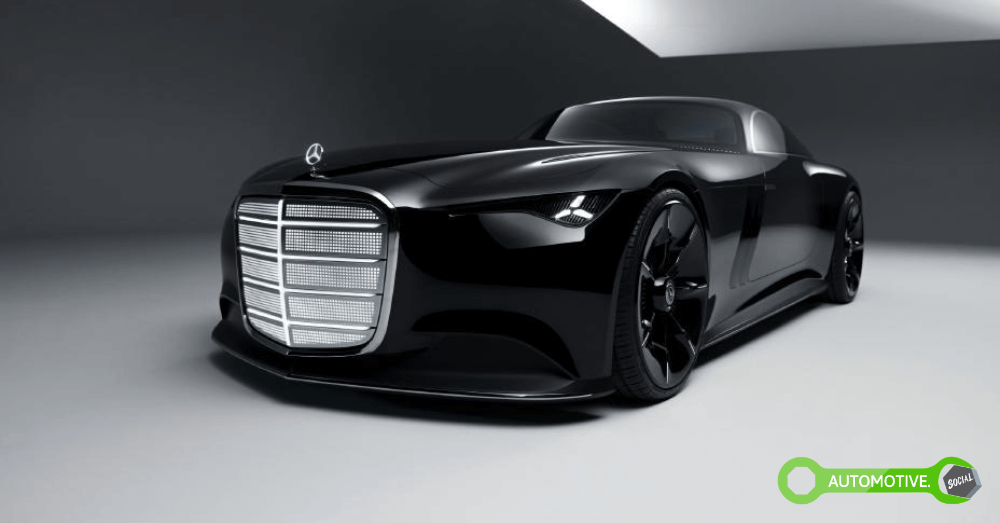
Mercedes-Benz just unveiled a concept car that looks like it time-traveled from a 1930s gangster movie straight into the future. The Vision Iconic is a black-gloss electric coupe dripping with so much style that Bruce Wayne probably already has his deposit down. This isn’t another boring egg-shaped EV—this is what happens when a design team watches too much film noir and decides that electric cars should look expensive, not sensible.
- Solar paint technology generates up to 7,450 miles of free driving range per year without plugging in
- Interior features Art Deco design with velvet bench seats, mother-of-pearl trim, and a floating glass dashboard
- Neuromorphic computing cuts autonomous driving energy use by 90% while enabling Level 4 self-driving capability
Solar Paint That Actually Works
Here’s the thing about solar-powered cars. Most concepts promise the moon and deliver a flashlight. But Mercedes teamed up with a company to create photovoltaic paste that gets painted directly onto the body panels. The entire surface becomes one big solar cell. Park this thing outside your house for a year and you’ll rack up enough juice for 7,450 miles of driving without touching a charging cable.
That’s not some theoretical lab number either. The paint works even when the car’s sitting in your driveway. Morning coffee on the patio? Your car’s charging. Grocery shopping? Still charging. It won’t replace plugging in completely, but it’s basically free range you’re collecting whenever the sun decides to show up.
A Grille That Demands Attention
Walk up to the Vision Iconic and that front grille hits you like a freight train. It’s huge, illuminated, and takes up most of the front fascia. Mercedes already started using this design language on the new electric GLC, but they dialed it up to ridiculous levels here. The lighting sequences animate and pulse like something out of Tron, except classier.
Some people will hate it. Others will want to marry it. That’s the whole point. This is Mercedes saying they’re done making electric cars that look like melted soap bars. The Vision Iconic pulls design cues from the legendary 300 SL but twists them into something that feels both retro and impossibly futuristic at the same time.
The Interior Is Basically a Time Machine
Forget tablet screens stuck to dashboards with double-sided tape. Mercedes went “hyper-analog” with something they call the Zeppelin, a floating glass dashboard that looks like it belongs in a luxury airship from 1938. Four chronograph-style clocks sit inside, telling time in different zones or displaying whatever metrics you actually care about.
The steering wheel logo floats inside a glass sphere. The seats are deep blue velvet bench-style affairs that would make your grandmother’s fancy sofa jealous. Mother-of-pearl trim catches the light. Polished brass door handles feel like they were salvaged from the Titanic (the good parts, before the iceberg). Even the steer-by-wire system, which ditches the traditional steering column, exists mostly so designers could create this rolling Art Deco fever dream without mechanical bits getting in the way.
It’s excessive. It’s theatrical. It works.
A Brain That Thinks Like Yours
Buried under all that visual drama is some genuinely wild tech. Mercedes is testing neuromorphic computing chips that process information the way human brains do, with neural networks that adapt and learn. Traditional autonomous driving systems guzzle electricity like there’s no tomorrow. These chips cut energy consumption by 90% while handling the same Level 4 self-driving tasks.
Level 4 means the car can handle basically everything without driver input in specific conditions. Drop yourself off at the restaurant, send the mercedes benz to park itself three blocks away, then summon it back when you’re done. The car handles parking garages, traffic, and all the boring parts of car ownership while you’re inside enjoying life.
Will We Ever Actually Drive This Thing?
Let’s be honest. This exact Vision Iconic will never roll off a production line looking like this. Concept cars exist to test ideas, push boundaries, and get people talking. But pieces of it will absolutely show up in future Mercedes models. The solar paint technology could appear within a few years. That massive grille design is already migrating to production cars. The Art Deco interior flourishes might get watered down, but the “less screen, more craft” philosophy feels like a direct response to Tesla’s minimalist interiors.
What Mercedes really built here is a statement. Electric cars don’t have to look like appliances. Luxury doesn’t mean covering every surface in screens and RGB lighting. Sometimes you want velvet seats, brass hardware, and paint that generates its own electricity. Sometimes you want a car that looks like it could star in its own movie.
What This Means for the Rest of Us
Most people shopping for electric cars right now are choosing between variations of the same aerodynamic blob shape. Manufacturers keep telling us that wind resistance matters more than style, that screens are more practical than tactile controls, that looking boring is the price of efficiency. The Vision Iconic argues the opposite. People still want cars with personality, even if those cars run on batteries.
The solar paint alone could change how we think about EV ownership. Imagine never worrying about finding a charger for your daily commute because your car drinks sunshine all day. Combine that with the kind of design that makes people turn their heads in parking lots, and you’ve got something actually interesting instead of another forgettable transportation pod.
Mercedes clearly studied what people miss about old cars. The craftsmanship, the style, the feeling that your vehicle was designed by artists instead of spreadsheet analysts. Then they asked how to bring those qualities into an electric future without sacrificing the tech that makes EVs actually better than gas cars. The answer apparently involves a lot of brass, some strategic velvet, and enough solar panels to keep Batman’s gadgets running.
Why This Actually Matters
Will this exact car ever exist outside of auto shows and design studios? Probably not. But Mercedes proved that electric vehicles can be gorgeous, practical, and weird in all the best ways. The Vision Iconic is excessive, theatrical, and completely unnecessary, which is exactly why it matters. It’s a concept car that remembers concepts are supposed to be exciting, not safe. And if even a fraction of this design language makes it into dealerships, the roads are about to get a whole lot more interesting.
